Greed, Terror, and Heroism
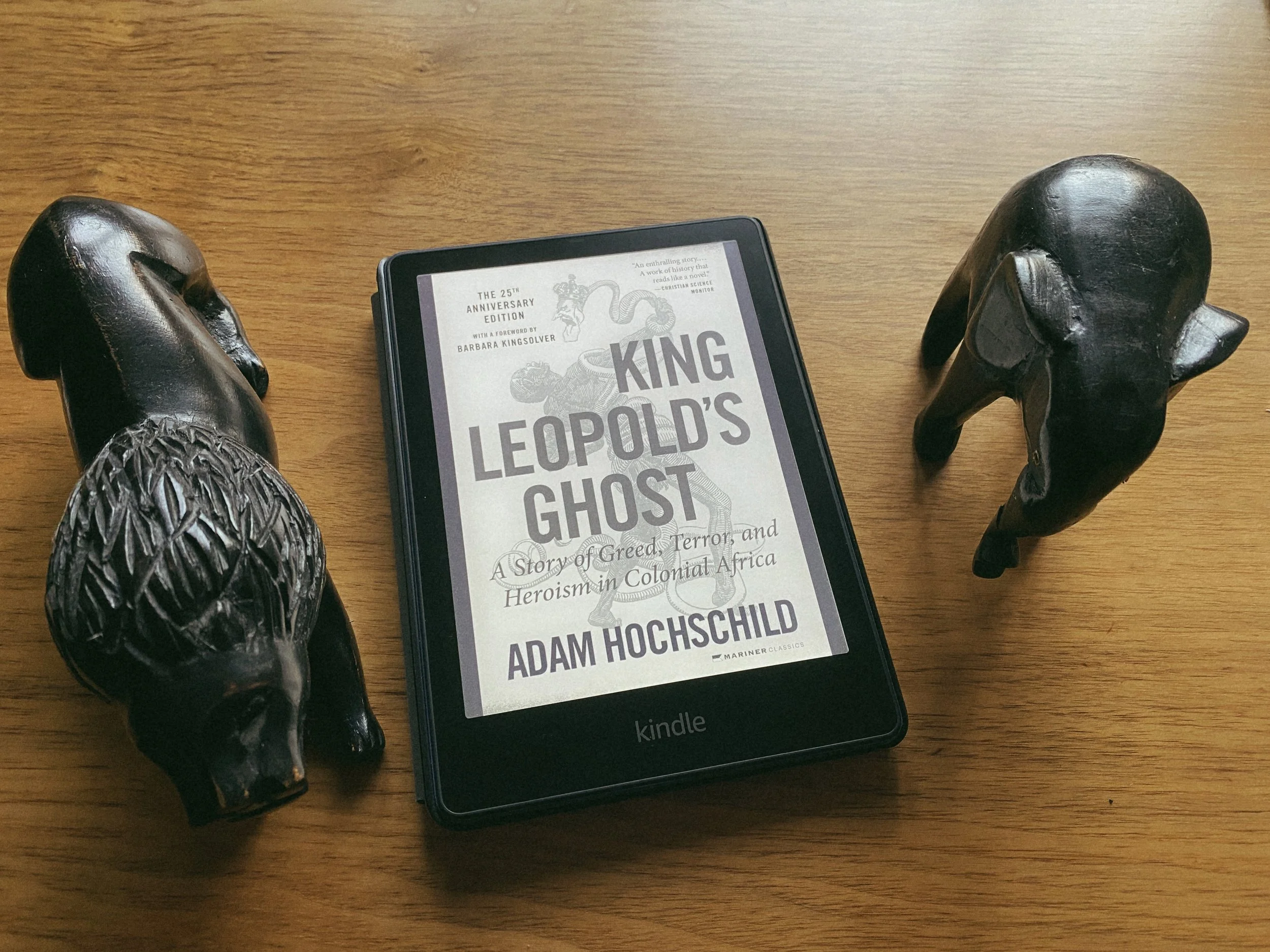
Adam Hochschild’s King Leopold’s Ghost: A Story of Greed, Terror, and Heroism in Colonial Africa is a haunting account of one of history’s most brutal chapters—the exploitation of the Congo under King Leopold II of Belgium. Hochschild begins in the mid-1870s, when Africa was portrayed as the “Dark Continent,” a land awaiting European conquest. Leopold, driven by ambition and greed, cloaked his imperial schemes in humanitarian rhetoric, yet the framework of his rule was military and merciless. Even children were not spared from the horrors of forced labor. Ironically, despite Congo being the dominating passion of his life, Leopold never set foot there.
The book vividly details the atrocities committed during the rubber boom from 1896 to 1903, when Leopold’s greed reached its peak. Millions suffered under a system of terror designed to extract profit at any cost. Hochschild also reveals that similar forced labor systems spread to French, Portuguese, and German colonies—yet these mass murders went largely unnoticed. Why then did Britain and the United States erupt in righteous protest over the Congo? Hochschild argues that Congo was a “safe target”: condemning Belgium carried no diplomatic or economic risk, unlike challenging major powers such as France or Germany. This insight exposes the selective morality behind humanitarian campaigns.
Beyond recounting horror, Hochschild explores the enduring legacy of colonialism. He reminds readers that recovery after conquest depends on pre-existing social and economic structures, and that Africa’s struggles today cannot be blamed solely on colonialism—though its impact was profound. The book draws sobering parallels between past and present, noting that democracy remains fragile worldwide, threatened by demagogues and ethnic chauvinism. Hochschild’s narrative forces readers to confront uncomfortable truths: the capacity for cruelty, the ease of forgetting through censorship and propaganda, and the slow, painful journey toward justice.
King Leopold’s Ghost is more than history; it is a moral reckoning. It compels us to ask why atrocities are ignored until they become politically convenient, and whether humanity has truly learned from its past. Hochschild names the crimes of yesterday with the hope that no horror will ever compare—and that Africa can one day heal and move beyond its scars.